

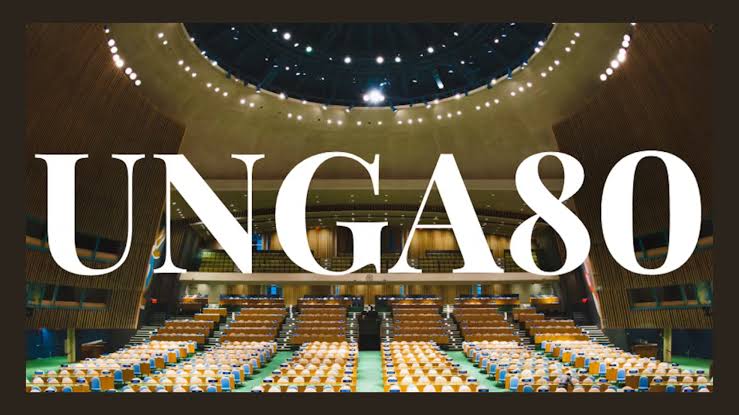
The 80th session of the United Nations General Assembly (UNGA80) is underway in New York, marking a significant milestone as the UN celebrates eight decades since its founding. This session is not only a platform for global dialogue but also a moment of reflection and reform, with world leaders gathering amid pressing international challenges and calls for change.
A central focus of UNGA80 is the ambitious UN80 Initiative, launched earlier this year to modernize the organization. The Secretary-General presented a progress report highlighting structural reforms aimed at making the UN more cost-effective, accountable, and responsive to the needs of its member states. These reforms seek to enhance the UN’s ability to address complex global issues efficiently.
Key issues dominating the agenda include advancing gender equality, governing the rapid development of artificial intelligence, and tackling non-communicable diseases and mental health concerns. Climate change remains a critical topic, with a dedicated summit emphasizing urgent action to combat environmental crises.
The session also unfolds against a backdrop of ongoing conflicts, notably in Ukraine, Gaza, and Sudan, which cast a shadow over discussions and underscore the Security Council’s current gridlock. This impasse has intensified calls for reform within the UN system to better manage and resolve such crises.
For regions like Africa, UNGA80 represents both challenges and opportunities, with leaders emphasizing the need for greater representation and support in global decision-making processes. The assembly serves as a platform to amplify voices from the Global South and address development priorities.
Overall, the 80th General Assembly is shaping up as an inflection point for the United Nations, balancing commemoration of its legacy with a forward-looking agenda aimed at revitalizing the institution to meet 21st-century demands. The outcomes of this session could set the tone for the UN’s role in global governance for years to come.
As the general debate kicked off on September 23, leaders from all 193 UN Member States and observer delegations began delivering addresses in the General Assembly Hall. Traditionally, Brazil opened the proceedings, followed by the United States as the host nation. Speeches, limited notionally to 15 minutes each, cover national priorities amid global crises, with the overarching theme “Better together: 80 years and more for peace, development and human rights.” Presiding over the session is Annalena Baerbock, the newly elected President of the General Assembly and only the fifth woman to hold the role in UN history.
Leading into the high-level week, an international conference on September 22 focused on the Israeli-Palestinian conflict, advancing negotiations for a two-state solution. UN Secretary-General António Guterres noted that this framework, envisioning two states for two peoples, feels “farther than ever before” amid the ongoing devastation in Gaza, where over 65,000 deaths have been reported since the October 2023 Hamas attacks. The meeting built on July 2025 Assembly discussions, though Israel and the United States did not participate, highlighting persistent diplomatic hurdles.
On the same day, world leaders marked the 30th anniversary of the Beijing Declaration and Platform for Action, a cornerstone for gender equality. Despite progress, UN Women reports a rising backlash against women’s rights. The Beijing+30 Action Agenda outlines goals for women and girls, including a digital revolution, eradication of poverty and violence, equal decision-making, involvement in peace and security, and climate justice. This aligns with the broader Gender Equality Snapshot 2025, emphasizing the need to empower marginalized groups globally.
Today, September 24, coincides with a pivotal climate summit at UN Headquarters, where nations are presenting updated Nationally Determined Contributions (NDCs) to curb warming below 1.5°C. Guterres called it “our moment of opportunity,” urging collaboration among governments, businesses, and civil society on mitigation, adaptation, finance, and combating misinformation. The event precedes COP30 in Brazil this November and addresses the accelerating climate crisis, from extreme weather in vulnerable regions like Vanuatu to broader sustainability efforts.
Looking ahead, September 25 will host discussions on artificial intelligence governance, addressing its transformative potential—from healthcare and translation tools to risks like surveillance and inequality. With no global AI regulatory body in place, leaders aim to establish inclusive guardrails to ensure equitable benefits and protect human rights, as Guterres warned of AI exacerbating divides without intervention.
Underpinning these events is the UN80 Initiative, a reform effort launched by Guterres to adapt the organization to modern realities. It confronts outdated structures from 1945, including mandate overload (over 40,000 accumulated, many without review clauses) and financial strains. Three workstreams focus on efficiency, mandate reviews using AI tools to eliminate redundancies, and structural shifts—like relocating staff closer to field operations in places such as Nairobi—to boost effectiveness and trust among member states. This builds on the 2024 Pact for the Future, positioning UNGA80 as a blueprint for delivering on the 2030 Sustainable Development Goals amid geopolitical shifts and the Global South’s growing influence