

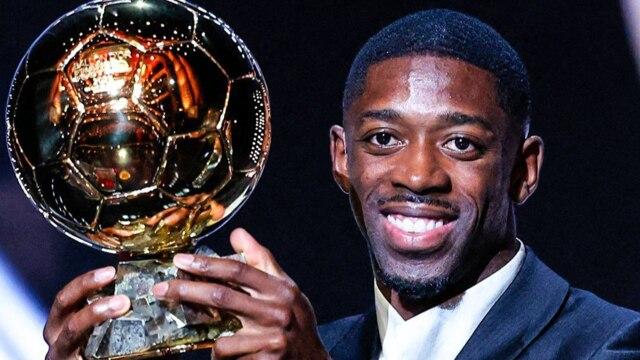
Ousmane Dembélé has won the 2025 Ballon d’Or, marking a remarkable milestone in his career. The Paris Saint-Germain and France star was honored at a ceremony in Paris on September 22, becoming the third first-time winner of the award since 2020. His victory is seen as a symbol of hard work, tactical intelligence, and resilience, crowning a career that has seen both highs and lows.
Dembélé’s win also signals a new era in football, as he edged out strong contenders like Barcelona’s young sensation Lamine Yamal. Analysts and experts praised Dembélé’s consistent performances, leadership, and impact on both club and country throughout the year. His journey to the top reflects not only his individual talent but also his ability to overcome challenges and contribute decisively in crucial moments.
The award ceremony, held at the Théâtre du Châtelet, was a moment of celebration amid a sometimes toxic football environment, highlighting the human side of the sport. Alongside Dembélé’s triumph, Barcelona’s Aitana Bonmatí secured her third consecutive women’s Ballon d’Or, underscoring a year of memorable achievements in football.
Dembélé’s Ballon d’Or win is more than just a personal accolade; it represents a shift in the football landscape, inspiring a new generation of players and fans worldwide.# Ousmane Dembélé’s Triumphant Ballon d’Or Victory: A New Era for Football’s Mavericks
Ousmane Dembélé’s name is etched in football history as the 2025 Ballon d’Or winner, a crowning achievement that caps a transformative year for the Paris Saint-Germain and France star. Announced on September 22 at a glittering ceremony in Paris, the 28-year-old Frenchman held off a fierce challenge from Barcelona’s teenage prodigy Lamine Yamal to claim the prestigious individual award. This marks the third consecutive first-time winner since 2020, following Manchester City’s Rodri in 2024 and Real Madrid’s Karim Benzema in 2022—both preceded by Lionel Messi’s record eighth triumph in 2023.
Dembélé’s emotional acceptance speech at the Théâtre du Châtelet captured the night’s magic. Visibly moved, he teared up multiple times, dedicating the honor to his mother in the audience and reflecting on a career defined by perseverance. “This is for everyone who believed in me when I doubted myself,” he said, his voice breaking as the crowd erupted in applause. The win not only celebrates his personal journey but also underscores PSG’s historic breakthrough, including their first UEFA Champions League title and a domestic treble that propelled them to European glory.
From Street Parks to Global Stardom: Dembélé’s Unlikely Path
Dembélé’s road to the Ballon d’Or has been anything but straightforward—a rollercoaster of brilliance, setbacks, and redemption. Emerging from the youth ranks at Stade Rennais, he exploded onto the scene with Borussia Dortmund in 2016, dazzling with his speed, dribbling, and unpredictability. His €105 million transfer to Barcelona in 2017 thrust him into the spotlight, but injuries and inconsistency drew criticism, labeling him a “man-child” ill-equipped for the pressure cooker of elite football.
It wasn’t until his 2023 move to PSG that Dembélé truly flourished. Under a supportive system, he evolved into a tactical linchpin, blending his raw talent with maturity and leadership. Last season’s Champions League heroics—scoring crucial goals and providing assists in knockout stages—were pivotal, as was his role in France’s Nations League campaign. Voters rewarded not just his 25 goals and 20 assists across all competitions, but his ability to elevate teammates like Vitinha, who claimed third place after his own treble with PSG and Nations League success with Portugal.
Dembélé’s roots in Vernon’s local parks, where he honed his skills shooting against walls and enduring scraped knees in endless street games, shine through in his play. As he shared in a recent interview, “We gave everything—bruises and all. That’s where I learned to outsmart anyone.” This park-football ethos—deceptive body language, hip feints, and shoulder drops that leave defenders in the dust—has made him a fan favorite, evoking the joy of childhood pick-up matches on a global stage.
A Clash of Generations: Dembélé vs. Yamal and the Dawn of Maverick Football
The 2025 Ballon d’Or duel between Dembélé and 18-year-old Lamine Yamal felt like a passing of the torch, yet both embody the “street-style” anarchy that reinvigorates the sport. Yamal, the runner-up, became the youngest ever to reach the podium—surpassing legends like Ronaldo Nazário, Lionel Messi, and Gianni Rivera, who were 20 at their first top-three finishes. The Barcelona wunderkind’s precocity is staggering: European and La Liga champion, scorer of Euro 2024’s standout goal, and Champions League’s best of the 2024-25 season by UEFA observers.
What unites them is a shared Barcelona lineage—mentored by Xavi Hernández, who once boldly promised club directors in 2021 that he could mold Dembélé into the world’s best. They even shared the pitch once, during Yamal’s debut against Real Betis in 2023, when the Spaniard was just 15 years and nine months old. Yet their trajectories diverge sharply. While Dembélé was once dismissed as immature and injury-plagued—nearly joining Manchester City at 18 but opting for Dortmund—Yamal arrived “born ready,” with a soccer IQ that humbled veterans from age 16.
This rivalry highlights football’s enduring love for mavericks, echoing the 1956 inaugural Ballon d’Or podium of Stanley Matthews, Alfredo Di Stéfano, and Raymond Kopa—daring dribblers who thrilled crowds in an era without live TV. In today’s data-driven game, where teams “cancel each other out,” Dembélé and Yamal’s “confidence trickster” flair—lying with eyes and hips, then exploding past—delivers pure, volcanic excitement. As one analyst put it, they are “soccer’s Rhinestone Cowboys,” risk-takers who lift spirits amid global tensions.
Broader Impact: PSG’s Treble, Women’s Honors, and Football’s Future
Dembélé’s victory extends beyond the individual, validating PSG’s resurgence. Their treble—Ligue 1, Coupe de France, and Champions League—ended years of near-misses, with Dembélé’s eight-trophy haul in the calendar year tipping the scales. It also spotlights France’s depth, with the nation producing yet another Ballon d’Or contender after Benzema.
The ceremony doubled as a showcase for women’s football, with Barcelona’s Aitana Bonmatí claiming her third straight women’s Ballon d’Or. Red carpet glamour aside—featuring bold outfits from stars like Yamal and Dembélé—the event transcended sport, fostering unity in a divided world. A poignant onstage embrace between Dembélé and Yamal symbolized respect across generations.
Looking ahead, Dembélé’s win inspires predictions for the future: Could Yamal dominate by 2030 alongside rising talents like Dowman or Ngumoha? For now, it reaffirms that in football’s evolution, the unexpected—born from park pitches and unyielding drive—remains king. As the 2025-26 season unfolds, Dembélé’s story reminds us: True greatness isn’t just talent; it’s the grit to rewrite your narrative