

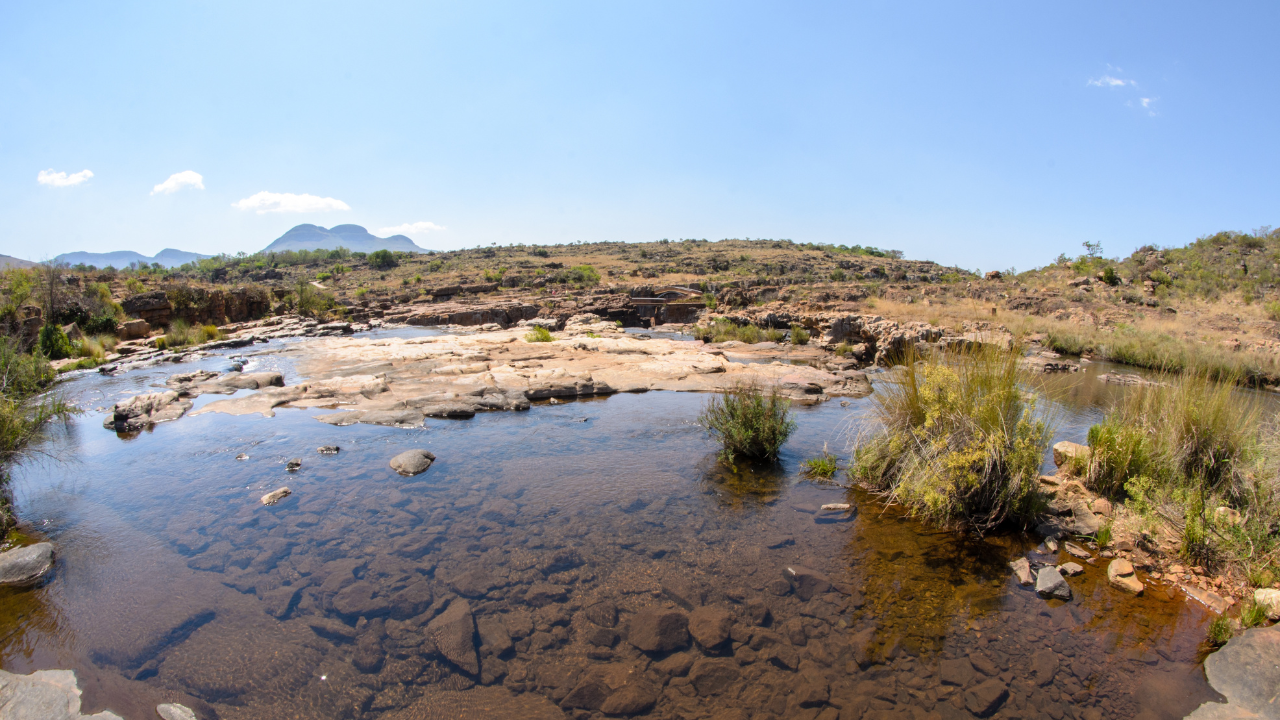
The devasting effects of cyclone El – Nino are already being felt in much of Southern Africa. For cities like Bulawayo which has seen exponential population growth over the decades and already carries a water shortage burden for its citizens things have only gotten to crisis point. With the current Bulawayo Mayor David Coltart rallying the government to declare Bulawayo a water crisis area so as to unlock support from areas and stakeholders.
After a recent meeting with government official representatives the Mayor stated that “There is a broad consensus now regarding the short-, medium- and long-term solutions to the crisis. We now need to jointly mobilise the resources needed to address the problem,” Coltart said after the meeting in Bulawayo, also attended by provincial minister Judith Ncube.
“Regarding our expressed wish that Bulawayo be declared a water shortage area, the minister has directed the technical committee to urgently report on current water holdings at Insiza, Inyankuni and Mtshabezi dams and the current ability to deliver that water to the city which will determine any decision regarding the declaration prayed for.”
Coltart maintains that the city’s water supply dams, although they got little inflows during this rainy season, hold enough water to quench the city’s thirst. Bulawayo residents currently get council water for two days in a week. Though the current situation has gotten to critical points with some residents going for almost a month without water.
BULAWAYO residents have given a one-week ultimatum to the local authority to fix and address the country’s second largest city’s perennial water crisis at a time when the southern African country is grappling with a devastating cholera outbreak. In the letter, which was written by BPRA’s lawyers Prisca Dube and Jabulani Mhlanga of Zimbabwe Lawyers for Human Rights, the residents, complained that water rationing was at its worst in Bulawayo, with some suburbs were experiencing prolonged water rationing for over three weeks.
The residents proposed that the situation facing the City of Bulawayo necessitates that it be declared as a water shortage area by Anxious Masuka, the Minister of Lands, Agriculture, Fisheries, Water and Rural Development, in terms of section 61 of the Water Act.
Access to safe drinking water and sanitation are internationally recognized human rights, derived from the right to an adequate standard of living under Article 11(1) of the International Covenant on Economic, Social and Cultural Rights.
On 28 July 2010, the United Nations General Assembly adopted a historical resolution recognizing “the right to safe and clean drinking water and sanitation as a human right that is essential for the full enjoyment of life and all human rights” (A/RES/64/292). Furthermore, since 2015, the General Assembly and the Human Rights Council have recognized both the right to safe drinking water and the right to sanitation as closely related but distinct human rights.
International human rights law obliges States to work towards achieving universal access to water and sanitation for all, without any discrimination, while prioritizing those most in need. In guiding the implementation by States, key elements of the rights to water and sanitation are elaborated by the Committee on Economic, Social and Cultural Rights in its General Comment No. 15 and in the work of the Special Rapporteur on human right to safe drinking water: